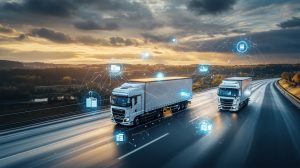
The era of driverless freight has only just begun. As AI technology continues to advance we’re striving closer to a world where autonomous delivery is truly upon us. Self-driving trucks can operate 24/7, increasing productivity and reducing delivery times. Many countries have already begun deploying driverless vehicles onto their roads including several countries in Asia. Our roads and the world will become a different place for years to come.
In 2023, companies like Waymo and Uber Freight might become major players invested into this technology. The question we’re all is asking is how will this affect food service and how safe is it? Inbound and outbound freight would be completely automated. Although it seems like jobs would be replaced but using this sort of technology would still require a human mind to program it. People may be skeptical or fearful about autonomous trucks on the roads, and there may be opposition from truck drivers who see their jobs threatened.The cost of freight would ultimately drop leading to better prices for the consumer.
This technology leverages a combination of sensors, cameras, radar, lidar (light detection and ranging), and AI algorithms to navigate, avoid obstacles, and make decisions during long-haul transportation. Autonomous trucks rely on machine learning and artificial intelligence to make decisions based on real-time data. Sensors help the truck understand its surroundings, detect other vehicles, obstacles, and road conditions. These systems can make driving decisions, such as when to accelerate, brake, and turn, all while following traffic laws.